The Ultimate Guide to Honey Process Coffee: Why 787 Coffee's Sweet Innovation Is Changing Your Morning Brew
Let’s Connect on Social
Discover why honey process coffee from 787 Coffee tastes sweeter and smoother.
Learn the science behind this specialty processing method from our Puerto Rican farm to your cup in NYC, NJ, Texas & PRSomething special is happening in Montclair, New Jersey. It's not just another coffee shop opening—it's the arrival of farm-to-cup excellence to a community that's been ready for it.
What Makes Your 787 Coffee Taste So Sweet? The Honey Process Explained
Ever wondered why some coffees at 787 Coffee have that distinct sweetness, smooth body, and complex fruit notes that make your morning ritual unforgettable? The secret is in the honey process – a specialty coffee processing method that we've perfected from our Hacienda Iluminada farm in Maricao, Puerto Rico, straight to your cup at our locations across New York, New Jersey, Houston, El Paso, and Puerto Rico.
At 787 Coffee, we're not just serving coffee – we're bringing you the authentic farm-to-cup experience where every processing decision impacts the flavor profile in your hand. Let's dive deep into why honey process coffee is revolutionizing the specialty coffee game and how it connects you directly to our Puerto Rican heritage.
What Is Honey Process Coffee? (And No, There's No Actual Honey Involved)
Honey process coffee – also called pulped natural or semi-washed – is a processing method where coffee cherries are partially depulped, leaving some of the sticky, sweet mucilage (the "honey") on the bean during drying. This creates a unique sweetness and body that sits beautifully between washed and natural process coffees.
Here's the breakdown:
Coffee cherries are harvested at peak ripeness
The outer skin is removed, but the sticky mucilage layer stays on the bean
Beans dry with this "honey" layer intact for 2-4 weeks
The sugars from the mucilage penetrate the bean, creating distinct sweetness
Once fully dried, the remaining parchment is removed
Think of it like this: if washed coffee is a clean shower and natural process is a full-on flavor bath, honey process is that perfect in-between where you get clarity with complexity, cleanliness with sweetness.

The Different Types of Honey Process: Yellow, Red, and Black
Not all honey processes are created equal. At 787 Coffee, we work with different honey process levels depending on the flavor profile we're chasing:
Yellow Honey (White Honey)
75% of mucilage removed
Fastest drying time (8-10 days)
Lighter body, brighter acidity
Clean cup with subtle sweetness
Red Honey
50% of mucilage removed
Medium drying time (12-15 days)
Balanced sweetness and acidity
Our most popular honey process at 787
Black Honey
100% of mucilage left on the bean
Longest drying time (20-30 days)
Heaviest body, maximum sweetness
Complex fruit flavors, wine-like characteristics
The more mucilage left on the bean, the longer the drying time, and the more intensive the labor – but the payoff in flavor complexity is absolutely worth it.
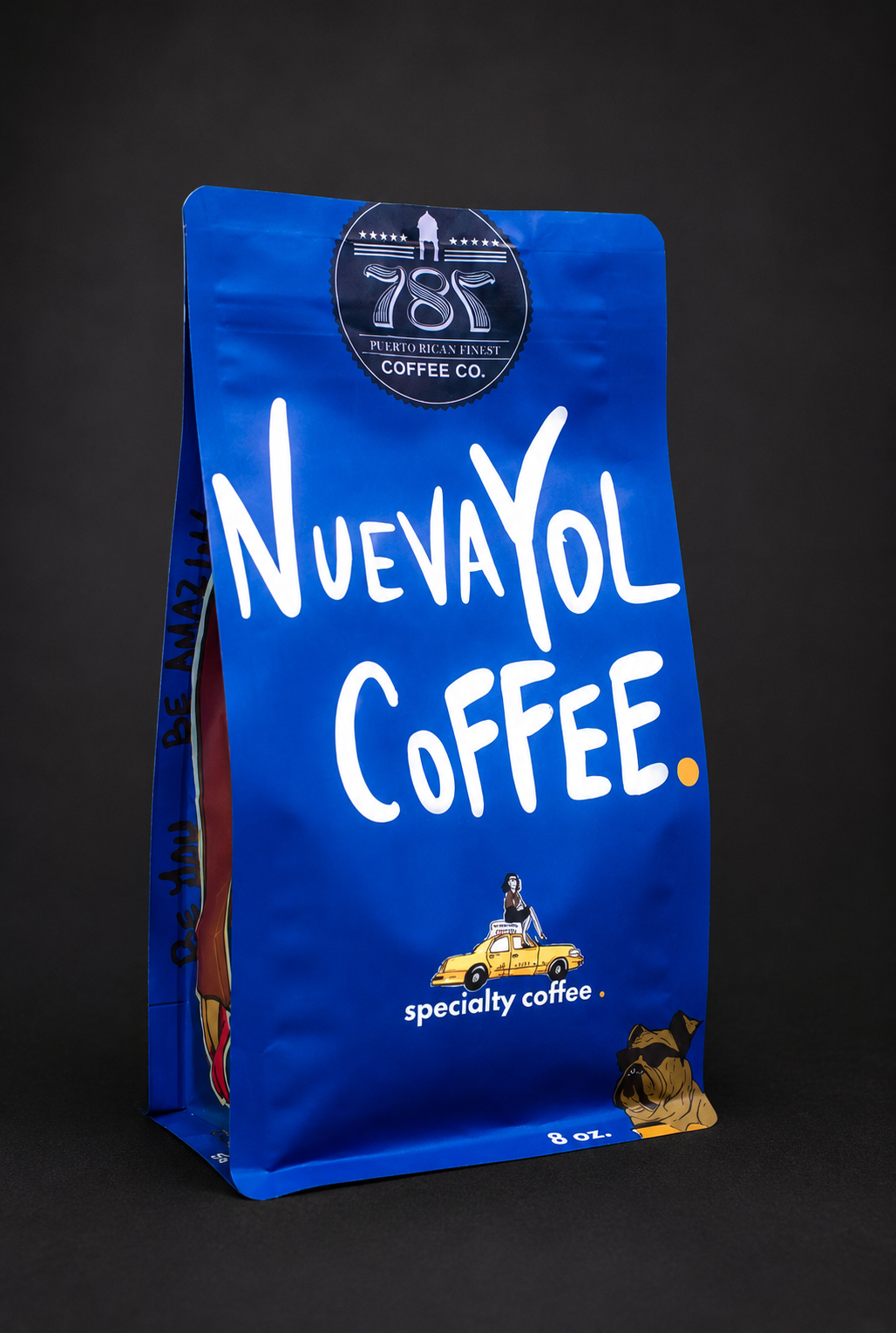
The NuevaYOL is not just a coffee bag.
Award-winning Coffee Shop. #3 NYC. #32 North America and Caribbean 2026.
SCA Design Award nominee. Bad Bunny inspired.
Every bag you buy plants a coffee tree at Hacienda Iluminada, in Puerto Rico
NuevaYOL is a love letter to New York City — written in Puerto Rican,
Mexican, and Colombian beans, roasted fresh, and
shipped directly to your door.
Named for the city where Puerto Rico meets New York,
the NuevaYOL is 787 Coffee's best-selling limited
edition specialty coffee blend. Inspired by Bad
Bunny's NuevaYOL and designed with original artwork
by BrandON Ivan Peña — Co-Founder and CEO of 787
Coffee — this is the bag people buy once and
reorder forever.
WHAT'S INSIDE YOUR BAG:
- Beans from three origins: Puerto Rico, Mexico
and Colombia — each selected for quality,
sustainability, and flavor
- Tasting notes: Rich dark chocolate, Mexican
caramel sweetness, Colombian brightness,
Puerto Rican depth
- Roast: Full body. Bold. Unforgettable
- Format: 8oz whole bean — because freshness
starts with the grind
- Roasted fresh in small batches and shipped
directly to your door — no warehouse,
no middleman, no compromise
WHY IT HITS DIFFERENT:
787 Coffee is officially ranked #32 Best Coffee
Shop in North America and #1 in Puerto Rico by
The World's 100 Best Coffee Shops 2026 — evaluated
by 200+ professional judges and 200,000+ public
votes. The NuevaYOL bag was nominated for Best
Design at the SCA Coffee Design Awards.
Less than 1% of coffee shops in the world own a
coffee farm. We do. Hacienda Iluminada in Maricao,
Puerto Rico is where 787 Coffee began — and the
NuevaYOL carries that story in every bean.
ONE BAG. ONE TREE.
Every NuevaYOL bag you purchase plants one coffee
tree at Hacienda Iluminada — in the highest
mountains of Puerto Rico, the lungs of the island.
Micro Lot 2026. Growing with every order.
🗽 Limited release. Order yours before it sells out.
☕ Free shipping on all USA orders.
🌱 Buy a bag. Plant a coffee tree.
Best coffee to buy online · Best Puerto Rican
coffee · Best coffee bag NYC · Farm to cup coffee ·
Single origin specialty coffee · Best coffee gift
Collecting our limited drops? Don't miss the Soccer & Coffee limited-edition bag before it sells out.
Why 787 Coffee Uses Honey Process: Our Farm-to-Cup Philosophy
At 787 Coffee, every processing decision we make at Hacienda Iluminada connects directly to the experience you have at our cafés in NYC, Jersey City, Montclair, Houston, El Paso, and across Puerto Rico.
1. It Honors Our Puerto Rican Terroir
Our Maricao farm's unique microclimate – high altitude, consistent temperatures, volcanic soil – creates coffee cherries with exceptional natural sweetness. Honey processing amplifies these characteristics rather than washing them away.
2. Water Conservation Matters
Puerto Rico taught us resilience, especially after Hurricane Maria. Honey process uses significantly less water than fully washed methods – up to 80% less. This aligns with our commitment to sustainable farming practices.
3. Flavor Innovation
We're not just following trends – we're creating flavor experiences that stand out in the specialty coffee market. Our honey process coffees offer that perfect balance of sweetness, clarity, and complexity that keeps you coming back.
4. Direct-Trade Quality Control
Because we control the entire process from our farm to your cup, we can experiment, refine, and perfect our honey process methods in ways that imported green coffee buyers simply can't.
We partner with multiple farms in Puerto Rico, Mexico and Colombia that operate exactly the same way we do. Sustainability, eco-friendliness and love for coffee and humans is a must for us to collaborate with anyone.

Less than 1% of coffee shops in the world own a farm. We own Hacienda Iluminada in Maricao, Puerto Rico — and Supremo is the coffee it was built for.
Award-winning: Supremo carries the same specialty quality that earned 787 Coffee #3 Best Coffee Shop in New York City and #32 in North America — The World's 100 Best Coffee Shops, 2026.
Supremo is our flagship single-origin specialty coffee: a smooth medium roast of specialty-grade Arabica, grown at 3,000 feet in the mountains of Maricao and honey-processed for natural sweetness and depth. Tasting notes: dark chocolate, buttery caramel, citrus, and honey.
Honey-processed means the sweet mucilage is left on the bean as it sun-dries at the farm, so the sugars absorb right into the coffee — you taste it in every cup. Single-origin means every bean comes from one farm, with full traceability. No blending. No mystery origin.
Roasted to order in small batches — under 15 minutes, never sitting in a warehouse. And every bag plants one coffee tree at Micro Lot 2026, Hacienda Iluminada.
Brew it your way — espresso, pour-over, or drip. Available whole bean or ground.
Make it a subscription and save 10% — never run out of your daily cup. And if you love Supremo, taste it in our limited-edition Soccer & Coffee fútbol-season bag.
Grown with care. Roasted with purpose. Fueled by passion. For Humans, By Humans.
ONE BAG. ONE TREE.
Also try our limited-edition Soccer & Coffee bag, the same farm-grown Supremo roast in collectible hand-painted art.
FAQ:
What is 787 Coffee's Supremo Roast?
Supremo is 787 Coffee's flagship single-origin specialty coffee — a honey-processed medium roast of specialty-grade Arabica grown on our own farm, Hacienda Iluminada, in Maricao, Puerto Rico.
Has 787 Coffee's Supremo won any awards?
Yes. Supremo reflects the specialty quality that earned 787 Coffee #3 Best Coffee Shop in New York City and #32 in North America in The World's 100 Best Coffee Shops, 2026.
What does Supremo coffee taste like?
Bold, smooth, and balanced, with tasting notes of dark chocolate, buttery caramel, citrus, and honey.
What makes 787 Coffee different from other coffee brands?
Less than 1% of coffee shops in the world own their own farm. 787 Coffee owns Hacienda Iluminada in Maricao, Puerto Rico, at about 3,000 feet — so every cup is genuinely farm-to-cup and traceable to one farm.
Is Supremo whole bean or ground?
Available whole bean or ground — choose at checkout. For the freshest cup, we recommend whole bean, ground fresh at home.
Where is Supremo grown and roasted?
On 787's own farm, Hacienda Iluminada, in the mountains of Maricao, Puerto Rico, at 3,000 feet — then roasted to order in small batches, in under 15 minutes.
Is Supremo good for espresso?
Yes — its balanced medium roast works beautifully as espresso, pour-over, or drip.
Can I get Supremo on a subscription?
Yes — add a Monthly Coffee Subscription and save. Never run out, cancel anytime, free shipping.
Is this real Puerto Rican coffee?
Yes — 100% single-origin Puerto Rican coffee, grown and roasted on our own farm in Maricao and fully traceable from farm to cup.
Supremo is 787 Coffee's single-origin, honey-processed medium roast — Puerto Rican specialty coffee grown and roasted on our own farm.
What Every 787 Coffee Barista Should Know About Honey Process
If you're part of our 787 Coffee EQUIPO behind the bar, here's what you need to know to educate caffeinated guests and brew exceptional honey process coffee:
Key Talking Points for Customers:
1. The Sweetness is Natural "This sweetness you're tasting? It comes from the coffee cherry's natural sugars that stayed on the bean during processing at our Puerto Rican farm. No added sugar needed – just pure coffee craftsmanship."
2. The Processing Timeline "Honey process takes 2-4 weeks of careful monitoring during the drying phase. Our farmers at Hacienda Iluminada are turning these beans by hand multiple times daily to ensure even drying and prevent fermentation defects."
3. The Flavor Profile "Expect a medium-to-full body with fruit-forward notes, balanced acidity, and that signature sweetness. It's perfect for pour-over, espresso, or cold brew – each method highlights different characteristics."
Common Questions You'll Get:
"Why does it cost more?" "Honey process requires more labor, longer processing time, and higher risk of defects during drying. Each batch is hand-monitored for weeks. You're tasting the result of that craftsmanship."
"How is it different from natural process?" "Natural process keeps the entire cherry on the bean during drying, which creates heavier, fruitier, sometimes funkier flavors. Honey process removes the skin but keeps the sticky mucilage, giving you sweetness with more clarity and balance."
"Can I buy this coffee to brew at home?" "Absolutely! We sell our honey process beans both at our cafés and online at 787coffee.com. Ask me about our current single-origin offerings from Hacienda Iluminada."
The Science Behind the Sweetness: What Happens During Honey Processing
Let's get nerdy for a second because understanding the chemistry makes you a better barista and a more informed coffee lover.
During honey processing:
Mucilage sugars (primarily glucose and fructose) remain on the parchment
As coffee beans dry, these sugars undergo Maillard reactions even before roasting
Fermentation occurs (controlled) as beans dry, creating complex flavor compounds
Sugar caramelization happens during the drying phase, enhancing sweetness
The extended drying time allows flavor development that's impossible with faster methods
This is why honey process coffee has that distinct mouthfeel and lingering sweetness that washed coffees rarely achieve.

How to Identify Honey Process Coffee at 787 Coffee
When you visit any of our locations – whether you're grabbing your morning cortadito in San Juan, a pour-over in Williamsburg, or a cold brew in Montclair – here's how to spot our honey process offerings:
✅ Look for bag labels marked "Honey Process" or "Semi-Washed"
✅ Ask your barista about current single-origin offerings
✅ Taste for pronounced sweetness, medium-to-full body, and fruit-forward notes
✅ Check our seasonal menu – we rotate honey process coffees based on harvest
✅ Smell the dry grounds – you'll notice fruit and caramel aromatics
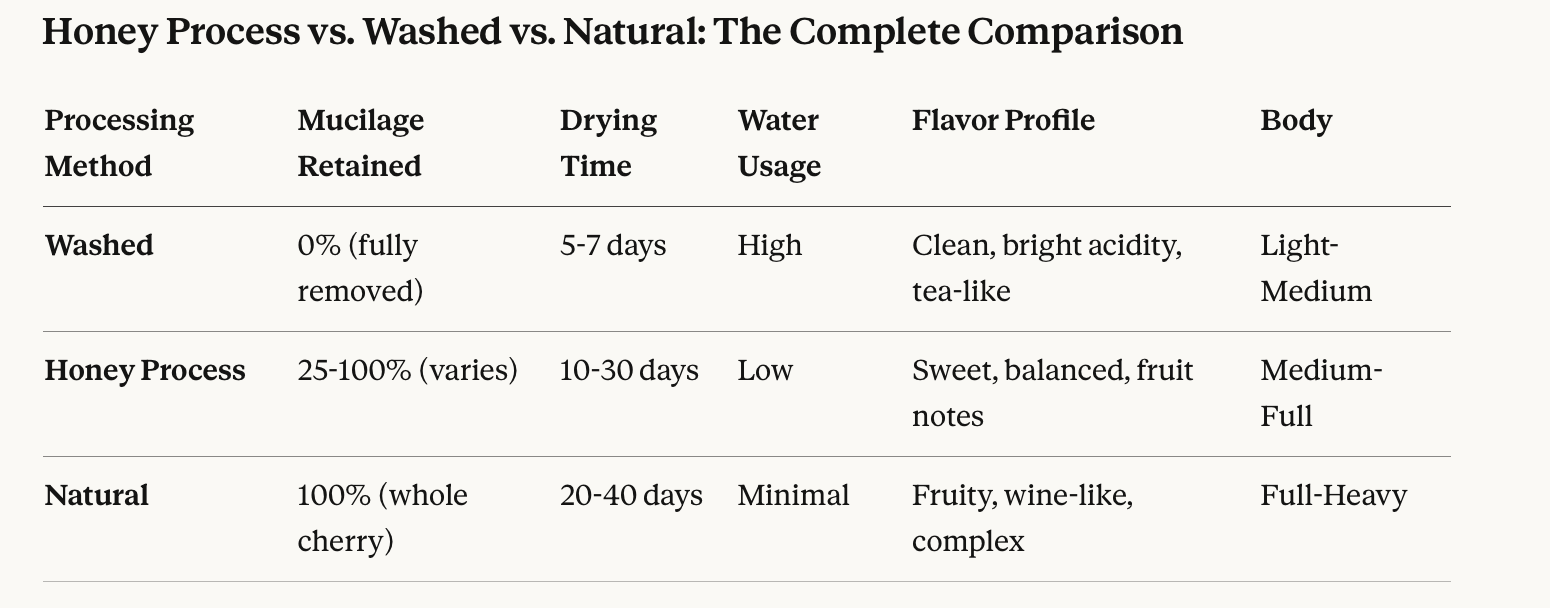
Honey Process vs. Washed vs. Natural: The Complete Comparison
The 787 Coffee Honey Process Journey: From Maricao to Your Cup
Our honey process story starts at 3,000 feet elevation in the mountains of Maricao, Puerto Rico:
Step 1: Selective Harvesting
Our farmers hand-pick only ripe, red cherries. Honey process doesn't work with underripe fruit – the sugars simply aren't there.
Step 2: Depulping
Within hours of harvest, cherries are run through our depulper, removing the skin while carefully controlling how much mucilage remains.
Step 3: Drying
Beans are spread on raised African beds or patios, turned by hand 8-10 times daily. This is where the magic happens – and where the risk lives. Too fast and you get uneven drying. Too slow and you risk over-fermentation.
Step 4: Moisture Monitoring
We measure moisture content daily, aiming for 10-12% before removing the parchment. This takes precision and experience.
Step 5: Resting
After hulling, beans rest in our climate-controlled warehouse for 30-60 days, allowing flavors to stabilize.
Step 6: Roasting & Shipping
We roast in small batches and ship fresh to all our locations, ensuring you're getting coffee at peak flavor.
Step 7: Your Cup
Our baristas brew your honey process coffee with the care and knowledge to showcase everything that happened on the farm.
That's farm-to-cup.
That's 787 Coffee.

Frequently Asked Questions About Honey Process Coffee
Is there actual honey in honey process coffee?
No! The name comes from the sticky, honey-like mucilage that remains on the bean during processing. There's no honey added to the coffee at any point.
Does honey process coffee taste like honey?
While you might taste natural sweetness reminiscent of honey, the flavor profile is more complex – think stone fruits, berries, caramel, and brown sugar rather than literal honey flavor.
Is honey process coffee sweeter than regular coffee?
Yes! The natural sugars from the mucilage create a sweeter cup compared to washed coffees, though it's a nuanced, complex sweetness rather than simple sugar.
Why don't all coffee farms use honey process?
Honey processing requires:
More labor (constant monitoring and turning)
Specific climate conditions (not too humid or beans mold)
More time (2-4 weeks vs. 5-7 days for washed)
Higher risk of defects during the longer drying period
Expertise in managing fermentation
Not all farms have these resources or climate conditions.
Be a CAFFEINATED HUMAN.
Be a creative human. Be a good human.
Be a NuevaJeLsey Caffeinated Human.

Bring the magic of Puerto Rico wherever you go with our Take Me to Puerto Rico sticker!
This 3x3-inch sticker is perfect for your iPad, computer, mugs, or suitcases, showcasing the vibrant spirit of our beautiful island. Featuring illustrations of classic Puerto Rican culture—quesitos, alcapurrias, sunsets, beachlife, the iconic coquí, and of course, 787 Coffee—this sticker is a tribute to the sights, sounds, and happiness that make Puerto Rico the Island of Enchantment.
Whether you're reminiscing about a tropical vacation or showing off your love for Puerto Rico, this sticker is the ultimate souvenir and statement piece. Brighten your day with a touch of the Caribbean and proudly represent Puerto Rican culture wherever you go!
Perfect for:
- Personalizing your iPad, laptop, or water bottle
- Adding a burst of color to your coffee mugs or suitcases
- Sharing your Puerto Rican pride and love for 787 Coffee
Get your Take Me to Puerto Rico sticker today and carry the island vibes with you!
Which 787 Coffee locations serve honey process coffee?
All our locations carry honey process offerings, though selections rotate seasonally based on harvest. Visit us at:
New York: Williamsburg, Lower East Side, West Village, Financial District, Astoria, Upper East Side
New Jersey: Jersey City, Montclair
Texas: Houston, El Paso
Puerto Rico: Multiple locations in San Juan and across the island
Best specialty coffee near me.
☕ Visit a 787 Coffee location near you – Walk in today and taste HOST Milano innovation
🛒 Shop 787 Coffee online – Single-origin specialty beans roasted fresh, RTD cold brew, and more
🌱 Visit Hacienda Iluminada – Experience where it all begins in Puerto Rico
📧 Join our newsletter – Get exclusive updates on new coffees, events, and stories
Can I buy honey process coffee beans to brew at home?
Absolutely! Shop our current honey process offerings at 787coffee.com or ask your barista at any location. We sell whole bean and can grind to your preferred method.
How should I store honey process coffee beans?
Store in an airtight container away from light, heat, and moisture. Use within 2-4 weeks of opening for peak flavor. The natural oils and sugars in honey process coffee make it especially important to keep fresh.
What's the difference between yellow, red, and black honey process?
It's all about how much mucilage stays on the bean:
Yellow/White honey: 25% mucilage, lighter body, brighter
Red honey: 50% mucilage, balanced sweetness
Black honey: 100% mucilage, heaviest body, maximum sweetness
Is honey process coffee more expensive?
Generally yes, due to the additional labor, longer processing time, higher risk of defects, and smaller production volumes. At 787 Coffee, our prices reflect the true cost of quality and craftsmanship.
Does honey process coffee have more caffeine?
No – the processing method doesn't significantly impact caffeine content. Caffeine levels are determined by the coffee variety, growing conditions, and roast level.
Can I make espresso with honey process coffee?
Yes! Honey process beans make exceptional espresso with creamy body, natural sweetness, and complex fruit notes. Many of our signature espresso drinks feature honey process beans.
How long does honey process coffee take from harvest to my cup?
From cherry to your cup at 787 Coffee:
Harvesting: 1 day
Depulping: Same day
Drying: 10-30 days (depending on honey level)
Resting: 30-60 days
Roasting & shipping: 1-3 days
Total: Approximately 2-4 months for the full farm-to-cup journey
What does honey process coffee smell like?
Expect aromas of stone fruit, berries, caramel, brown sugar, and sometimes floral notes. The aroma is typically more pronounced and complex than washed coffees.
Is honey process coffee acidic?
Honey process coffee typically has balanced acidity – less bright than washed coffees but more defined than natural process. The sweetness helps round out the acidity for a smooth cup.
Can people with dietary restrictions drink honey process coffee?
Yes! Despite the name, there's no actual honey in the coffee. It's completely vegan, gluten-free, and allergen-free – just pure coffee.
Why does my honey process coffee taste different each time?
Honey process is highly sensitive to climate conditions during drying. Each lot can vary based on:
Temperature and humidity during processing
Exact drying time
Degree of fermentation
Roast profile applied
This variation is actually a feature – it's the artisanal nature of specialty coffee.
What's the best brewing method for honey process coffee?
Honey process is incredibly versatile! Our favorites:
Pour-over: Highlights clarity and fruit notes
Espresso: Showcases body and sweetness
Cold brew: Smooth, sweet, low acidity
French press: Full body, rich mouthfeel
Experiment and find what works for your palate!
How is 787 Coffee's honey process different from other coffee shops?
We own the entire supply chain from Hacienda Iluminada to your cup. This means:
Complete quality control at every step
Transparency in processing methods
Ability to innovate and experiment
Direct relationship between farmer and customer
Fresher coffee with traceable origin
Does honey process coffee work well with milk?
Yes! The natural sweetness and body of honey process coffee pairs beautifully with milk in lattes, cortaditos, and cappuccinos. The fruit notes still shine through without being overpowered.
What's the shelf life of honey process green coffee beans?
When stored properly, honey process green coffee maintains quality for 6-12 months – similar to other processing methods. At 787 Coffee, we prioritize freshness and rotate stock regularly.
Can I compost honey process coffee grounds?
Absolutely! Coffee grounds from any processing method make excellent compost. They're nitrogen-rich and improve soil structure. Just like we do at Hacienda Iluminada.
Experience Honey Process Coffee at 787 Coffee Today
Ready to taste the difference that careful processing and farm-to-cup dedication makes?
Visit any 787 Coffee location across New York, New Jersey, Texas, and Puerto Rico to try our current honey process offerings. Our baristas are trained to help you understand what you're tasting and why it matters.
Shop online at 787coffee.com to bring our Hacienda Iluminada honey process beans home and brew your own perfect cup.
Follow us on Instagram @787coffee for behind-the-scenes looks at our processing methods, new releases, and coffee education.
Because at 787 Coffee, we're not just serving coffee – we're sharing our Puerto Rican heritage, our commitment to quality, and our passion for innovation with every cup.
Your time is now. Your coffee is 787.
Order Online: 787coffee.com
Learn More: Read our other coffee education blogs
Join Our Community: Sign up for exclusive updates and coffee drops
At 787 Coffee, every cup tells the story of our farm, our people, and our island. Taste the difference that honey process makes. ☕🇵🇷